


Large Retail Property: Façade Investigation
Defect pathology investigation for a large Brighton retail property suffering from severe external façade cracking. Initially suspected as Regent Street Disease, Consurv’s targeted opening-up works and specialist testing revealed complex material movement and chloride-induced steelwork corrosion. By recommending an Impressed Current Cathodic Protection system, Consurv successfully challenged the original proposal for extensive structural removal, delivering…
Project Overview
Consurv was appointed to investigate significant cracking and deterioration affecting the external façade of a large retail property in Brighton.
The defects were initially suspected to be associated with Regent Street Disease. Consurv undertook further investigation, including targeted opening-up works to assess the condition of the concealed primary and secondary steelwork.
Further Investigation
Following Consurv’s initial findings, and working closely with the Main Contractor, a specialist corrosion consultant was appointed to undertake detailed testing and assessment.
The investigation established that the deterioration was more complex than initially suspected, with more than one mechanism contributing to the observed defects. Some of the façade cracking was found to be associated with movement at interfaces between different construction materials.
In other areas, active corrosion of embedded steelwork was confirmed, with specialist testing identifying chlorides within the original concrete construction as the principal cause of the ongoing deterioration.
The Outcome
An Impressed Current Cathodic Protection system was recommended to suitable areas of retained concrete to control ongoing corrosion of the embedded steelwork and reduce the risk of recurring deterioration.
The original remedial approach had involved extensive removal and replacement of the façade and associated structural elements. Through further investigation and specialist assessment, Consurv helped develop a more targeted remedial strategy which allowed elements of the existing structure to be retained.
This significantly reduced the extent of replacement works required, providing the client with a more cost-effective approach, while addressing the underlying cause of the deterioration.
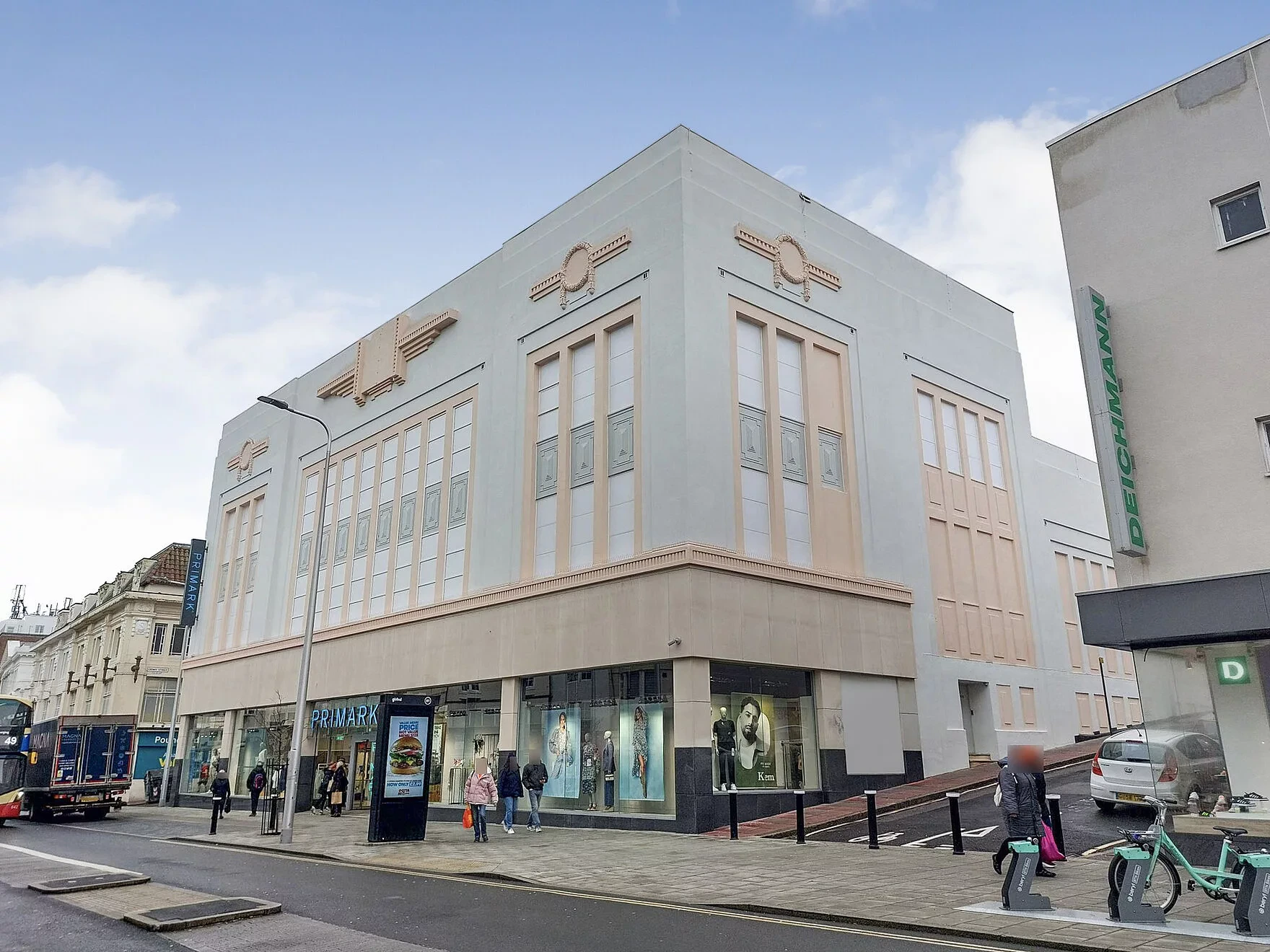
The Banks Building in 2012 courtesy Wikimedia Commons


